
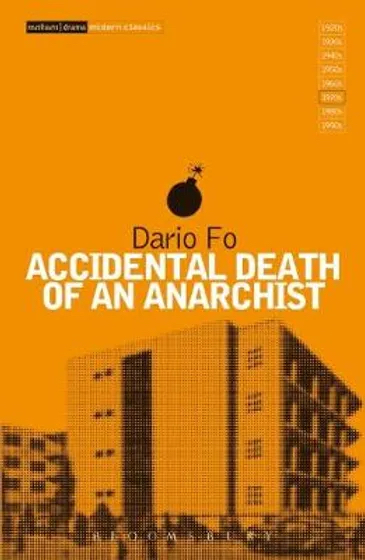
Accidental Death of an Anarchist is a play by Italian playwright Dario Fo that premiered in 1970. It has been performed across the world in more than forty countries. The play is based on the 1969 Piazza Fontana bombing and on the death of Giuseppe Pinelli while being interrogated by the police.
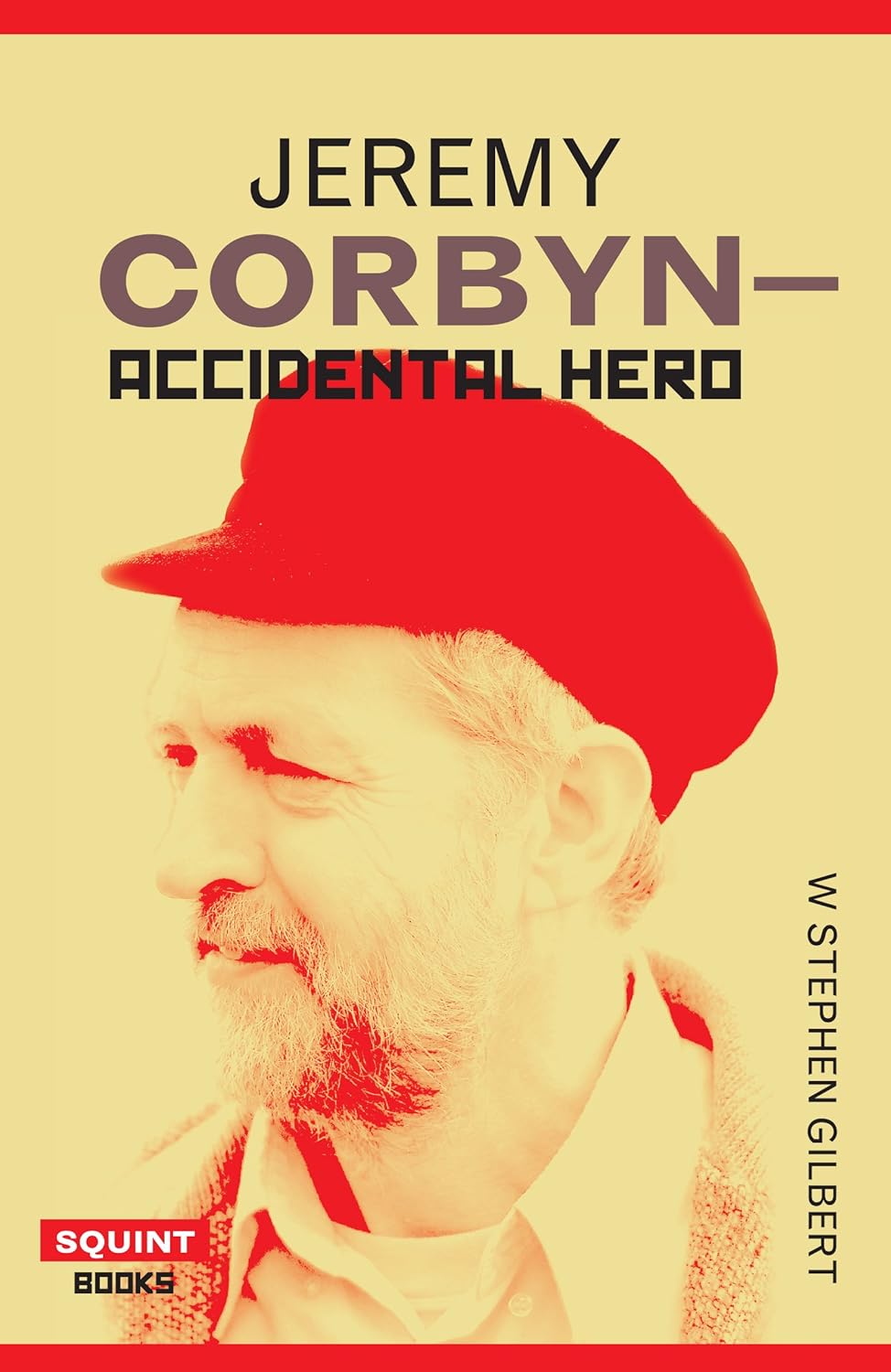
A few months ago, few had heard much about mild-mannered backbench MP Jeremy Corbyn. Now he is the surprise leader of the Labour Party, after winning a grassroots campaign. But who is this man who divides his own party, the media, and Britain in general. Is he an accidental hero, a footnote waiting to happen, or is he new kind of politician, one who no longer plays by the rules of spin? W Stephen Gilbert has crafted a brief, lucid, compelling and readable study of the politician we will all be talking about for years to come. This is the necessary primer to find out what you need to know.
In his most explicitly political work to date, Pierre Bourdieu speaks out against the new myths of our time - especially those associated with neo-liberalism - and offers a passionate defence of the public interest. The withdrawal of the state from many areas of social life in recent years - housing, health, social services, etc. - has produced growing despair in the most deprived sections of the population; the dismantling of public welfare in the name of private enterprise, flexible markets and global competitiveness is increasing the misery of those who have suffered most. In this sharp, uncompromising attack on neo-liberalism and those who champion it - from the IMF to the President of the Bundesbank, from politicians to academic commentators - Bourdieu stands up for the interests of the powerless and helps to give a voice to those individuals, groups and social movements whose views are rarely heard in the dominant media.
Electrifying essays on the history, complexity, diversity of a continent, from the father of modern African literature. Penguin Modern: fifty new books celebrating the pioneering spirit of the iconic Penguin Modern Classics series, with each one offering a concentrated hit of its contemporary, international flavour. Here are authors ranging from Kathy Acker to James Baldwin, Truman Capote to Stanislaw Lem and George Orwell to Shirley Jackson; essays radical and inspiring; poems moving and disturbing; stories surreal and fabulous; taking us from the deep South to modern Japan, New York's underground scene to the farthest reaches of outer space.
Three leading Africa scholars investigate the social forces driving the democratic transformation of postcolonial states across southern Africa. Extensive research and interviews with civil society organizers in Zimbabwe, South Africa, Zambia, Malawi, Namibia, and Swaziland inform this analysis of the challenges faced by non-governmental organizations in relating both to the attendant inequality of globalization and to grassroots struggles for social justice.
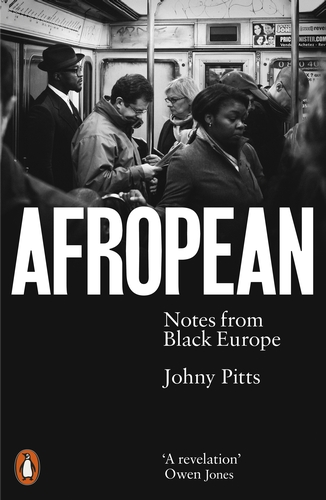
Afropean is an on-the-ground documentary of areas where Europeans of African descent are juggling their multiple allegiances and forging new identities. Here is an alternative map of the continent, taking the reader to places like Cova Da Moura, the Cape Verdean shantytown on the outskirts of Lisbon with its own underground economy, and Rinkeby, the area of Stockholm that is eighty per cent Muslim. Johny Pitts visits the former Patrice Lumumba University in Moscow, where West African students are still making the most of Cold War ties with the USSR, and Clichy Sous Bois in Paris, which gave birth to the 2005 riots, all the while presenting Afropeans as lead actors in their own story.
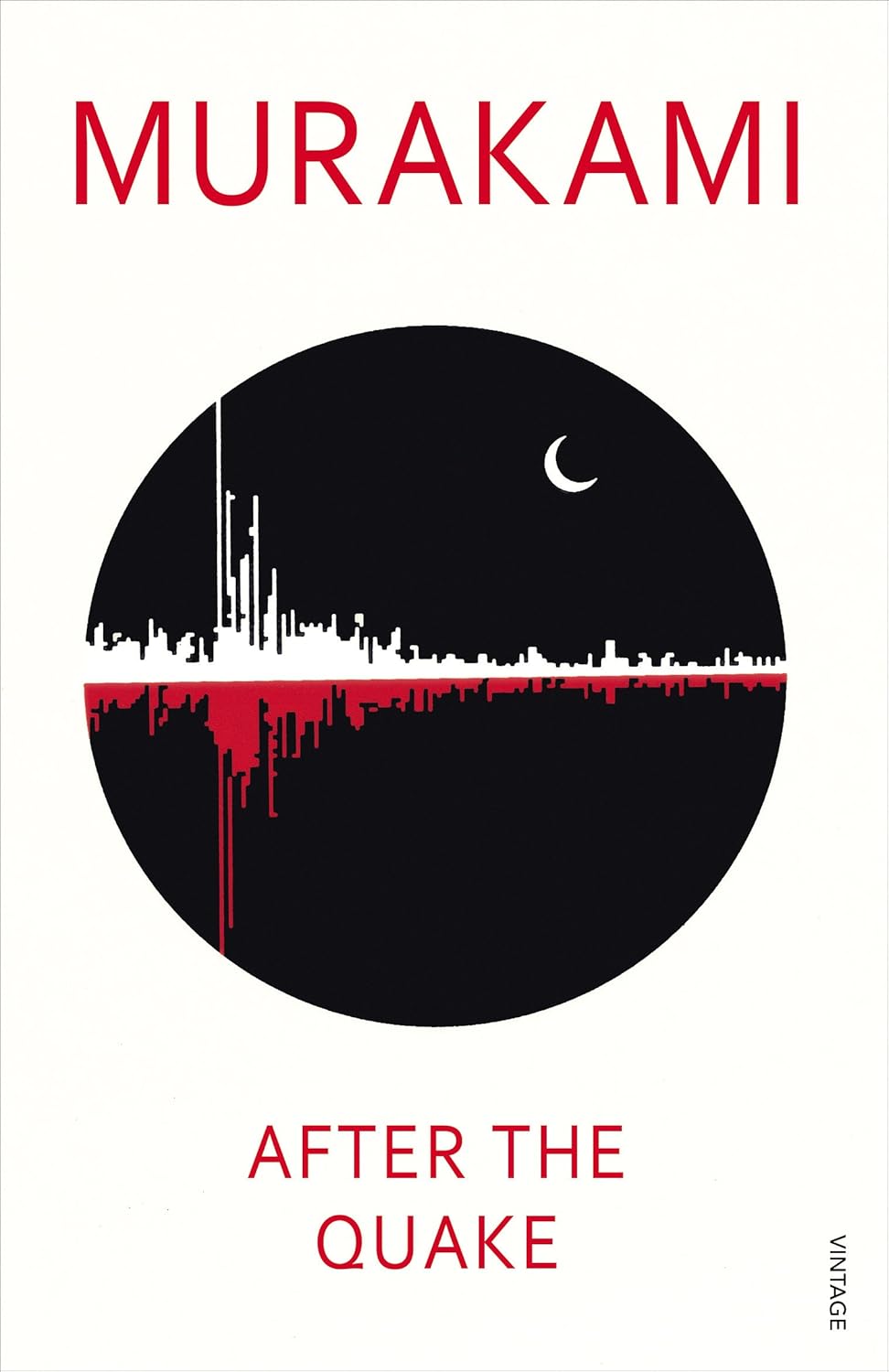
Tales of upheaval and confusion, longing and love in the aftermath of the Kobe earthquake.
For the characters in after the quake, the Kobe earthquake is an echo from a past they buried long ago. Satsuki has spent thirty years hating one man: did her desire for revenge cause the earthquake? Miyake left his family in Kobe to make midnight bonfires on a beach hundreds of miles away.
Fourteen-year-old Sala has nightmares that the Earthquake Man is trying to stuff her inside a little box. Katagiri returns home to find a giant frog in his apartment on a mission to save Tokyo from a massive burrowing worm. 'When he gets angry, he causes earthquakes,' says Frog. 'And right now he is very, very angry.
'In a dance with the delights of Murakami's imagination we experience the limitless possibilities of fiction. With these stories Murakami expands our hearts and minds yet again' The Times

THE EXPLOSIVE INTERNATIONAL BESTSELLER
With all-new excerpts from Richard Clarke's dramatic public testimony, and revealing corroboration from The 9/11 Commission Report
From the 9/11 Commission Report:
"On the day of the meeting [September 4, 2001], Clarke sent Rice an impassioned personal note. He criticized U.S. counterterrorism efforts past and present. The 'real question' before the principals, he wrote, was 'are we serious about dealing with the al Qida threat?...Is al Qida a big deal?...Decision makers should imagine themselves on a future day when the CSG has not succeeded in stopping al Qida attacks and hundreds of Americans lay dead in several countries, including the US,' Clarke wrote. 'What would those decision makers wish that they had done earlier? That future day could happen at any time.'"
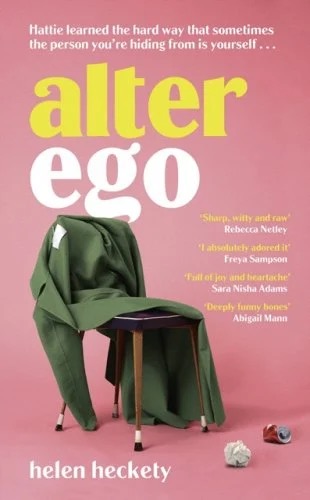
Six months ago, something happened that changed everything for Hattie. The next morning, she came up with The Plan. It was time for a whole new life. That's how Hattie ends up in a little cabin in the middle of nowhere, where the woodland stretches for miles and stars light up the night sky. Here, Hattie can be whoever she wants to be.
At two years old, Hattie was diagnosed with a condition that would alter the course of her life. Ever since then she's had to constantly explain herself and pretend that the pitying looks don't bother her.
If she wants The Plan to work, nobody back home can know why she really left, and nobody in her new life can know the truth about her.
But it's not long before she's caught in her lies - trapped between who she really is, and who she so desperately wants to be. When everything falls apart, can she piece herself back together?
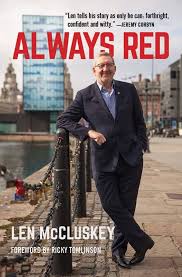
Len McCluskey is the standout trade unionist of his era. Head of the giant Unite union for more than a decade, he is a unique and powerful figure on the political stage.
In this major autobiography, McCluskey throws back the curtains on life at the top of the Labour movement—with explosive revelations about his dealings with Keir Starmer, the behind-the-scenes battles of the Corbyn era, his secret Brexit negotiations with Theresa May’s government, the spectacular bust-up with his former friend Tom Watson, and his tortuous relationship with Ed Miliband.
McCluskey is no run-of-the-mill trade unionist. Fiercely political, unflinchingly left wing, he is a true workers’ leader. His politics were formed in Liverpool at a time of dock strikes, the Beatles, and the May 1968 revolution in Paris. An eyewitness to the Hillsborough tragedy, he recounts in harrowing detail searching for his son.
Witty and sharp, McCluskey delivers a powerful intervention, issuing a manifesto for the future of trade unionism and urging the left not to lose sight of class politics.
A central player in a tumultuous period of British political history, McCluskey’s account is an essential—and entertaining—record of our times.