
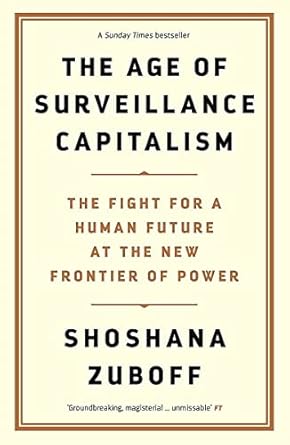
Easily the most important book to be published this century. I find it hard to take any young activist seriously who hasn't at least familarised themselves with Zuboff's central ideas.' - Zadie Smith, The Guardian
The challenges to humanity posed by the digital future, the first detailed examination of the unprecedented form of power called "surveillance capitalism," and the quest by powerful corporations to predict and control us.
The heady optimism of the Internet's early days is gone. Technologies that were meant to liberate us have deepened inequality and stoked divisions. Tech companies gather our information online and sell it to the highest bidder, whether government or retailer. Profits now depend not only on predicting our behaviour but modifying it too. How will this fusion of capitalism and the digital shape our values and define our future?
Shoshana Zuboff shows that we are at a crossroads. We still have the power to decide what kind of world we want to live in, and what we decide now will shape the rest of the century. Our choices: allow technology to enrich the few and impoverish the many, or harness it and distribute its benefits.
The Age of Surveillance Capitalism is a deeply-reasoned examination of the threat of unprecedented power free from democratic oversight. As it explores this new capitalism's impact on society, politics, business, and technology, it exposes the struggles that will decide both the next chapter of capitalism and the meaning of information civilization. Most critically, it shows how we can protect ourselves and our communities and ensure we are the masters of the digital rather than its slaves.

First published in 2001, this book brings together all of Arundhati Roy's political writings so far. This revised paperback edition includes two new essays, written in early 2002: 'Democracy: Who's She When She's Not at Home', which examines the horrific communal violence in Gujarat, and 'War Talk: Summer Games with Nuclear Bombs', about the threat of nuclear war in the Subcontinent.

"Sometimes it is a quiet voice, no more than a whisper. But understanding the whisper, deep rumblings are heard. Because the black man is a giant dam about to burst!" This gripping collection of stories by some of America's best known authors is an echo of that voice.

From the psychedelic typography used in 'Make Love Not War' posters of the 60s, to the solitary raised fist, take a long, hard look at some of the most memorable and striking protest artwork from across the world and throughout history. With an emphasis on design, analyse each artwork to understand how colour, symbolism, technique, typography and much more play an important role in communication, and learn about some of the most influential historical movements.
Tips and activities are also included to get you started on making some of your own protest art.
Guided by activist, lecturer and speaker De Nichol's powerful own narrative and stunningly illustrated by a collaboration of young artists from around the world, including Diana Dagadita, Olivia Twist, Molly Mendoza, Raul Oprea and Diego Becas, Art of Protest is as inspiring as it is empowering.
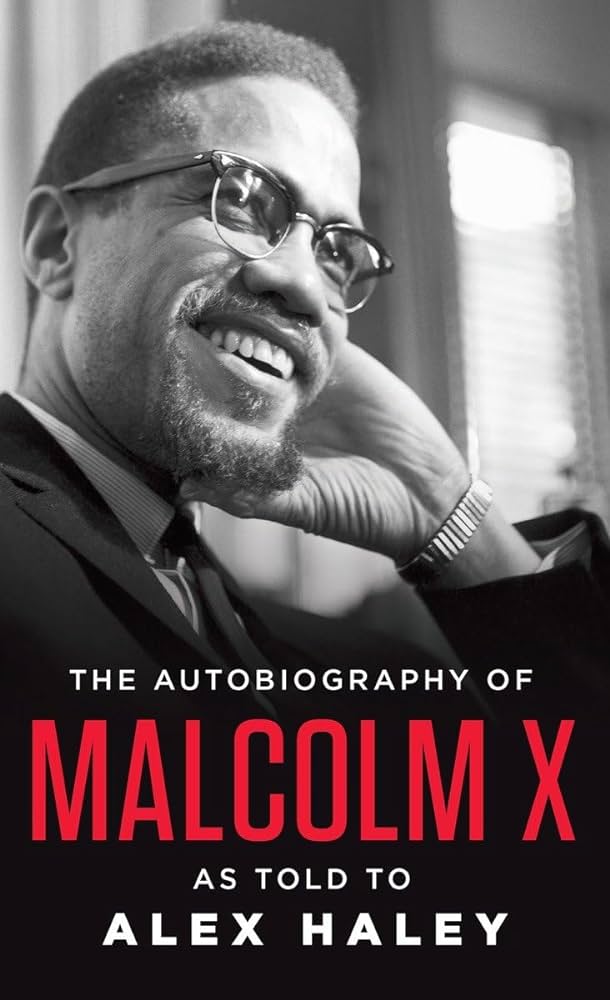
In the searing pages of this classic autobiography, originally published in 1964, Malcolm X, the Muslim leader, firebrand, and anti-integrationist, tells the extraordinary story of his life and the growth of the Black Muslim movement. His fascinating perspective on the lies and limitations of the American Dream, and the inherent racism in a society that denies its nonwhite citizens the opportunity to dream, gives extraordinary insight into the most urgent issues of our own time. The Autobiography of Malcolm X stands as the definitive statement of a movement and a man whose work was never completed but whose message is timeless. It is essential reading for anyone who wants to understand America.

Imam Ghazali’s Bidayat al-Hidaya is a highly motivational manual detailing the fundamentals of acquiring guidance through God-consciousness (taqwa). Imam Ghazali argues that just as there is an end to this noble objective there is also a beginning to it, which must be made firm for one to achieve success. He then goes on to expound the fundamentals of this “beginning.” While being concise and to-the-point the manual is laid out in the form of a detailed daily timetable providing the reader strong inspiration and much heart-rending counsel. The three sections of this book are on obedience, refraining from disobedience, and the etiquette of companionship with the Creator and with creation. One of Imām Ghazālī’s final works, it embodies a lifetime of learning, experience, and spirituality and can be taken as an introduction to his larger works. This translation published for the first time with facing Arabic text also includes many notes and transliteration for the supplications contained within.

A boy comes to terms with his identity as a mixed-race gay teen - then at university he finds his wings as a drag artist, The Black Flamingo. A bold story about the power of embracing your uniqueness. Sometimes, we need to take charge, to stand up wearing pink feathers - to show ourselves to the world in bold colour.
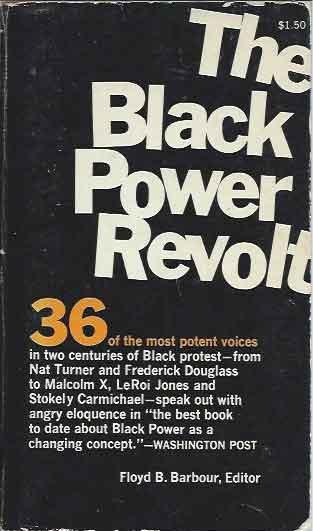
"Floyd Barbour's The Black Power Revolt does us great service by showing how current concepts of Black Power are deeply rooted in history and are recorded in the writings of such men as Nat Turner, Frederick Douglass, and W. E. B. DuBois. Barbour skillfully edits an assorted collection of essays (some original) that focus on theoretical and practical aspects of the various interpretations of Black Power"--From Lucius J. Barker's book review in the Midwest journal of political science, Volume 13, Number 4 (November, 1969).